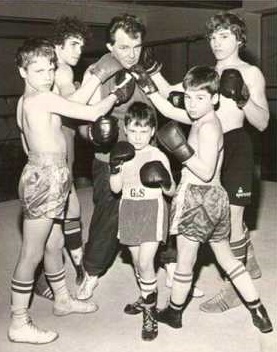
The Fighting Hiltons: the family that shook the rings of Montreal and the United States
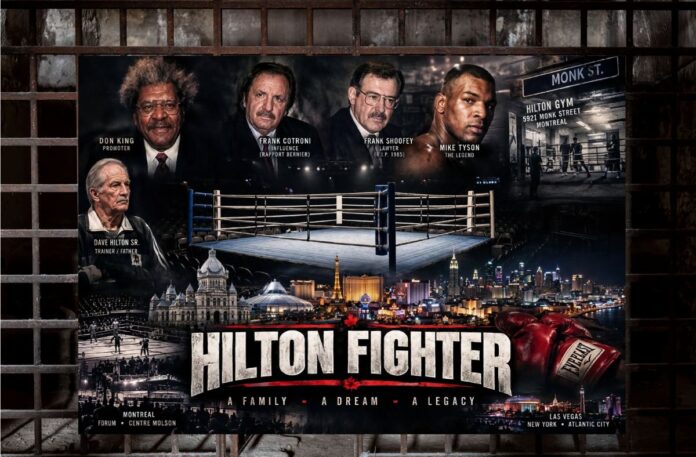
Two world champions from one family, a gym on rue Monk, Don King, Mike Tyson, and the shadows of boxing’s old world
Then there are the Hiltons.
For close to three decades, the name Hilton was practically a synonym for boxing in Montreal. Dave Hilton Sr. and his sons Dave Jr., Alex, Matthew,Stewart and Jimmy grew up inside a world where heavy bags, sparring and fight nights were the family business. By age five, all five boys were in the gym learning the trade that had made their father a national champion. Max Boxing’s profile of the family puts it simply: for the Hiltons, boxing was the family business.
The Hiltons were not just a boxing family from Quebec. They were a ring dynasty, the kind American fight fans usually associate with the Griffiths, the Spinkses or the Mayweathers.
Two of them became world champions: Matthew Hilton, IBF junior middleweight champion in 1987, and Dave Hilton Jr., WBC super middleweight champion in 2000. Alex Hilton won a Canadian title at 18 and stayed a fixture of the Quebec scene for more than two decades. He was the last of the brothers to leave the ring, and he died in April 2026 at 61.
But the story does not stop at the belts.
It runs through Montreal, through neighborhood gyms and rue Monk, through the Montreal Forum and the Molson Centre, then out to New York, Las Vegas and Atlantic City. It runs through Don King, Mike Tyson, Cus D’Amato and Bob Arum. And it runs, more darkly, through the Quebec inquiry that documented organized crime’s grip on the province’s boxing in the exact years the Hilton brothers came up.
One thing should be said plainly before anything else. Describing these historical relationships is not the same as accusing every member of the Hilton family of belonging to the mafia or taking part in crimes. The record of the era describes a boxing milieu in which certain promoters, managers and organized crime figures moved in the same circles, and in which the young Hiltons were trained and shaped very early. That distinction matters, and this article will keep returning to it.
That combination of talent, fame, money and danger is exactly what makes the Hilton story worth an American reader’s time. It is a real boxing saga with real champions in it. It is also a document of what the fight game, at its most brutal and least regulated, could do to the people inside it.
A family built around boxing
The patriarch, Dave Hilton Sr., was born in Edmundston, New Brunswick on August 29, 1940. His family moved to Kentucky when he was 15, and he won Golden Gloves featherweight titles in Texas and Kentucky as an amateur before turning professional in 1958. Between 1958 and 1976 he won 65 of 81 pro fights and became Canadian champion in three weight divisions: featherweight as a teenager, then both light middleweight and middleweight in 1971.
Then he became the trainer and manager of his own sons.
His standards were merciless. Matthew Hilton later remembered a father who demanded total dedication, in a childhood where boxing was not a Saturday-morning activity but the entire environment. When Matthew turned professional in early 1983, the family lived a nomadic life, moving from place to place in a movable trailer, following the fight circuit.
The five brothers:
Dave Jr., the eldest, born in 1963, a professional by 1981, and by many accounts the most naturally gifted of the five.
Alex, born in 1964, a professional in 1982, a Canadian champion at 18.
Matthew, born in 1965, the one who became a world champion first.
Stewart, born in 1968, the youngest of the fighters, who never got the chance to become anything at all.
Jimmy, the youngest of the five, who fought as an amateur and never turned pro.
On September 4, 1986, Stewart, 17, died when his car ran into a bridge abutment near Montreal and exploded. A friend died with him. The Los Angeles Times, which profiled the family two years later, noted there was no evidence of alcohol in that crash. The paper’s framing stuck: the family had gone from the Five Fighting Hiltons to four.
The Hilton gym on rue Monk
To understand the Hiltons, you have to understand the gym.
Professional boxing in that era was not built only in big arenas. It was built in far more modest places: training rooms, neighborhood clubs, gyms where boys learned to take a punch long before they had any idea what a career would be. Club records of the period list a gym associated with the Hilton name at 5921 rue Monk in Montreal’s Ville-Émard district, and a “Montreal Club de Boxe Hilton” at 6200 Monk. The sources available do not let us pin down with certainty which years each address covers, but the family’s footprint on that street is real, and it belongs to a specific era in the sport.
Rue Monk is not a decorative detail in this story.
It represents a time when a fighter’s development ran through the neighborhood gym. Not through Instagram. Not through social media. Not through a marketing team. You built a fighter on the heavy bag, the jump rope, sparring and amateur bouts, and the Hilton boys were raised inside that culture. An American fan looking for the Canadian equivalent of a gritty Philadelphia gym tradition will recognize Ville-Émard instantly.
Matthew Hilton: the prodigy
Matthew is the most spectacular chapter of the saga, and the one American television audiences actually saw.
He turned pro in early 1983 and became a Montreal star almost immediately, with an aggressive, pressure-first style built on hooks and real one-punch power. He was not looking to win elegantly. He was looking to impose.
By early 1986 he was unbeaten and starting to fight outside Quebec. Two results built his name, and both matter to anyone who wants to understand the scale of what he did.
On February 15, 1986, at the Paul Sauvé Arena in Montreal, Hilton, then 20 years old and 20-0, faced Wilfred Benitez. Benitez was 27, a former champion in three weight classes and one of the most gifted boxers who ever lived, a future Hall of Famer. The Los Angeles Times reported what happened: Benitez went down in the first round from a hard right, and Hilton finished him at 2:57 of the ninth with a flurry. The kid from Ville-Émard had knocked out a genuine legend. On the way up he had also stopped former middleweight champion Vito Antuofermo, a name every American fan of the era knew.
By the end of 1986, Hilton was fighting in the United States on a regular schedule: a points win over Aniseto Ramos at Madison Square Garden in June, a second-round stoppage of Franklin Owens at the Las Vegas Hilton in November, and a second-round knockout of William Clayton back at the Garden in December. The name Hilton was now circulating in the actual American market, not the Canadian one.
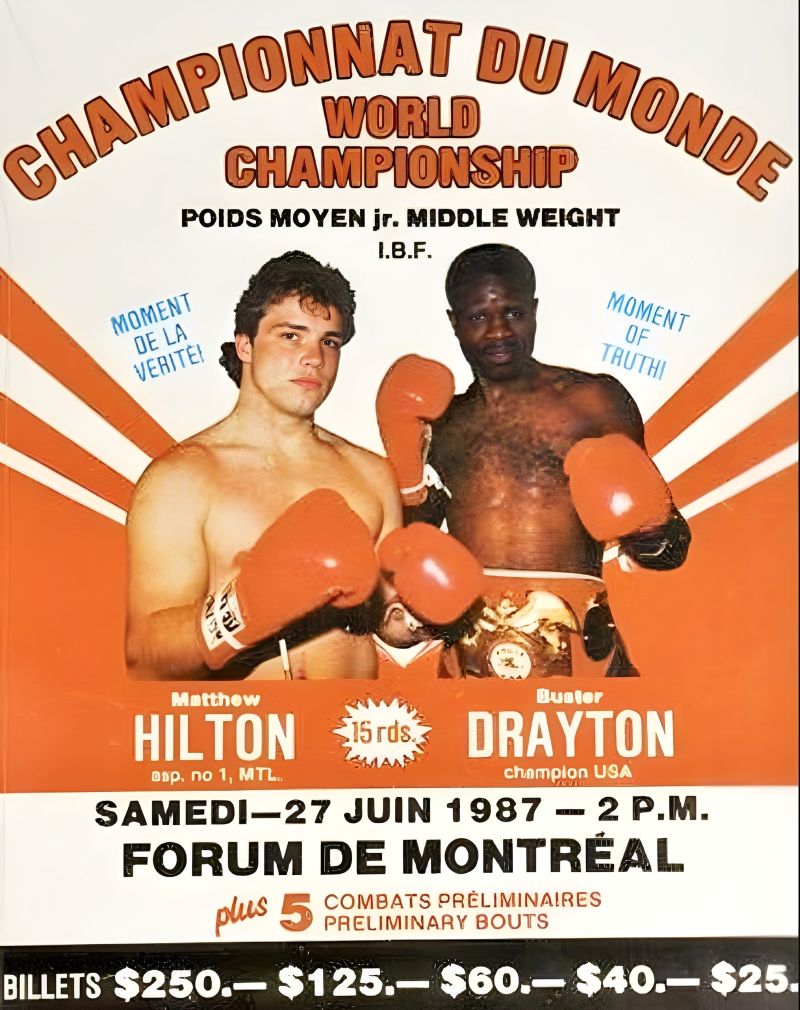
June 27, 1987: fifteen rounds at the Forum
This is the night that put the Hilton name in the history books, and it deserves the full picture.
In June 1987, Montreal still had its Expos, but the city had not produced a world champion prizefighter in 44 years. Canada had not had a world boxing champion since the 1940s. The opponent brought in to fix that was Buster Drayton of Philadelphia, a tough, seasoned IBF junior middleweight champion. The fight was broadcast in the United States on ABC.
Drayton was not a soft touch, and everyone in boxing knew it. Drayton went down in the opening round from a monster right hand. What followed was a fifteen-round war, the last title fights of that era still going fifteen. The crowd at the packed Forum chanted “Matthew! Matthew! Matthew!” through it. In the final round, ABC’s Jim Lampley told the American audience: “There is not a soul seated in the Montreal Forum! You’re looking at a 21-year-old who could become his country’s first world champion in 44 years.”
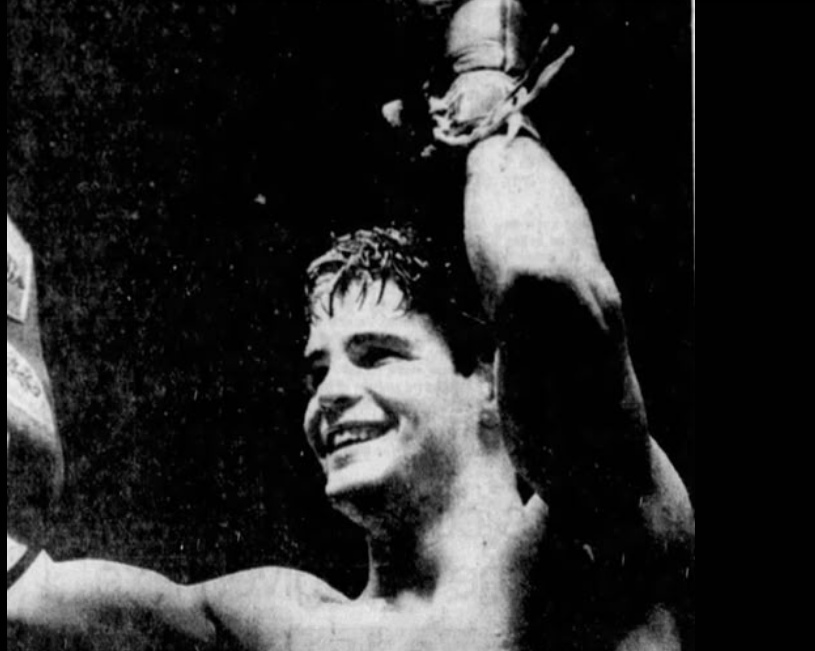
The unanimous decision made Matthew Hilton a world champion: 144-140, 146-139 and 147-138 on the judges’ cards. KO Magazine named it the 1987 TV Fight of the Year. Lampley, ringside, called it as well as anyone ever has: “You will seldom see a more spectacular demonstration of sheer courage and competitiveness on the part of two boxers.”
Stephen Brunt of the Globe and Mail wrote the line that summed up the fight: “Drayton is at least 34, Hilton is 21 and strong as a bull, and there the fight was lost and won.”
Hilton himself described the night, years later, to Boxing247:“I was saying my prayers the night before the fight, it was my lifelong dream to become world champion, and now here I was in the ring. It’s hard to put it into words what it meant. I got my dream. Lots of people, they never manage to get theirs.”
For Canadian boxing, the effect was immediate. Montreal trainer Russ Anber, one of the most respected voices in the Canadian fight game, put it this way: “It was really the fight that paved the way for the modern Quebec boxer to obtain world championship status. I think it opened the doors and it made people realize it’s possible. We can win on the world stage. Otis Grant captured a world title, Eric Lucas captured a world title, Davey Hilton captured a world title and so on. It all started with Matthew Hilton beating Buster Drayton in a 15-round decision.”
The father was in the corner. The family was at the summit. And Matthew was 21 years old.
Crossing into America
This is where the story becomes especially interesting for an American fan, because the Hiltons did not stay locked inside the Montreal market.
Matthew’s first title defense came on October 16, 1987 in Atlantic City, on the undercard of Mike Tyson versus Tyrell Biggs on HBO. The challenger, Jack Callahan, was busted up so thoroughly that he retired in his corner after two rounds. The Hiltons were now attached to Tyson’s orbit, on American network television, on the biggest cards in the sport. A non-title bout followed in July 1988, a fourth-round knockout of Paul Whittaker at Caesars Palace.
The next defense was set for November 4, 1988 at the Las Vegas Hilton, on a card that also featured Thomas Hearns and IBF middleweight champion Michael Nunn. Hilton’s purse was $375,000. A kid from a movable trailer in Montreal was now being paid like a premium cable fighter.
The name Hilton had crossed the border for good.
The Hiltons and Mike Tyson
One of the strangest and best threads of the whole Hilton story involves Mike Tyson.
Matthew Hilton and his brothers spent three summers in Catskill, New York, adding pieces of Cus D’Amato’s celebrated method to the Fighting Hilton style. The Hilton patriarch knew D’Amato, and the families’ worlds overlapped. Matthew and Tyson were teenagers together in that gym. As the Montreal blog Coolopolis recounted around the later Hilton-Tyson reunion, the two formed a bond as teens training under D’Amato, though they never actually sparred against each other.
“We lived together way before he was famous, in the Catskills,” Matthew told Boxing247. “He is such a down to earth guy, even now. I don’t brag about it but we are friends and every time he sees me he makes such a fuss over me!”
The symmetry is remarkable. On one side: Cus D’Amato shaping Mike Tyson. On the other: Dave Hilton Sr. shaping the Fighting Hiltons. Two very different schools of boxing, and one shared philosophy: build young fighters who are ferociously disciplined and mentally prepared for combat.
When Matthew later signed with Don King, he found himself riding Mike Tyson undercards in the United States, a friendship and a business relationship tangled together the way only boxing can tangle them.
Don King enters the story
Then arrives one of the most famous, and most controversial, figures in the history of promoting: Don King.
The facts here are documented, and they are worth stating precisely. The Hiltons signed with King in 1985. Their lawyer, Frank Shoofey, opposed the deal. Dave Sr. later admitted the contract with King was a mistake, though he insisted to the end that the decision to sign had been his own and that he had no regrets about the man he considered a family friend. King, in the 1980s, controlled a massive share of the American market and put on the biggest cards in boxing.
Bob Arumalso promoted Matthew for a period, and Arum’s assessment of him was not small talk: he claimed Hilton could be the greatest thing in the middleweight division since Marvin Hagler. Matthew would sign a six-fight deal with Arum’s Top Rank before his career wound down.
But the King years left a bitter taste, and Matthew said so plainly: “Probably when I left Montreal and went with Don King in the U.S. My brother Davey was the big star here in Montreal. I went with King and a lot of my fights were on undercards, Mike Tyson cards.”
There is a nuance worth keeping. King opened the door to the American market and the big shows for the Hiltons. That is real, and it mattered. It does not mean the relationship served the fighters as well as it served the promoter. Matthew felt underused, parked on undercards, not fighting often enough. Years later the fans and writers who tracked his career settled on the same verdict: the talent was world class, and the career management was anything but.
The Frank Cotroni file
This is the part of the story that requires the most care.
In the 1980s, Quebec boxing was hit by allegations of infiltration by organized crime. A Quebec government inquiry into combat sports, chaired by Judge Raymond Bernier, delivered its report in 1986 on boxing and kick-boxing, and the sections dealing with the fight game’s criminal connections leaked into the press. What Canadians learned was systemic corruption around the sport, and the central name in it was Frank Cotroni, the longtime Montreal crime boss.
The Globe and Mail’s obituary for Alex Hilton summarized the inquiry’s conclusion bluntly: Cotroni, it found, was the “guiding spirit” of boxing in Quebec, and exercised an “outsized influence” on any business decisions the Hiltons made. CBC’s retrospective on the family reported that the leaked report described the brothers’ careers as controlled by Cotroni, and that it was Cotroni who pushed them toward the signing with King.
And here is the point that must be stated clearly, and that the Hiltons themselves always insisted on.
None of this establishes that the Hiltons were members of the mafia, or that the brothers committed crimes for Cotroni. The historical record is that of a family of very young boxers operating inside an industry where organized crime figures held real influence. Dave Hilton Sr. spent years fighting the allegations. In 1990 he called the claims that he and his sons had fixed fights for Cotroni “lies,” and described Cotroni as his best friend: “I have no regrets whatsoever. He’s still my friend.” He acknowledged that Cotroni had helped the family with groceries and household expenses, and said that was the extent of it. The inquiry’s picture of the milieu, and the family’s picture of their own intentions, coexist without resolving each other.
The inquiry existed precisely because this infiltration of the sports world was the thing being investigated. The young Hiltons were, in the commission’s own framing, promising fighters vulnerable to that influence because of their age and their hunger to succeed. That is the story of an era, not the verdict on five brothers.
Frank Shoofey: the lawyer who tried to stop the deal
Frank Shoofey occupies a singular place in this saga.
He was one of Montreal’s best-known criminal lawyers, active in the Quebec Liberal Party, and the Hilton family’s lawyer. He opposed the contract with Don King, believing his young clients could get far better terms than what the deal offered. On October 15, 1985, Shoofey spent part of his last evening alive at a Montreal Athletic Commission hearing, trying to prevent King from co-promoting a Matthew Hilton bout.
Late that same night, an unknown assailant shot him multiple times in the hallway outside his fifth-floor law office. Shortly after, the Montreal Gazette received a call from a man claiming to belong to the “Red Army Liberation Front,” saying: “I and my colleagues have just assassinated Frank Shoofey. Good riddance.” Canada’s intelligence service had never heard of any such group, and suspected the call was meant to throw investigators off. The murder has never been solved.
The Hiltons were shattered. They considered Shoofey family.
Rumors and theories have connected his death to the boxing war, to the King contract, to Cotroni, for decades. Here the discipline of the historian has to hold. It would be irresponsible to state as fact that Shoofey was killed because of the Hiltons, or on the orders of Don King or Frank Cotroni. What the record shows is that the murder was never solved, that the timing was grotesque, and that many people in the boxing world found the file deeply suspicious. A lawyer fights a promoter’s contract at a commission hearing, and is gunned down in his office the same night. That is what is documented. The rest remains hypothesis, and this article will leave it there.
November 4, 1988: the American dream ends against Robert Hines
At the Las Vegas Hilton, Matthew Hilton defended his IBF title for the second time against Robert Hines, a Philadelphian with a good chin and better timing.
Hilton, usually a fast starter, dropped Hines twice in the early rounds and appeared to be cruising. Then the fight turned. Hines steadily hammered a very tired and, it emerged later, injured champion. Matthew had hurt a rib in sparring before the bout, and between rounds he could be heard telling his father that he could not throw his left hand. Hines won a come-from-behind twelve-round unanimous decision, and Matthew Hilton was a world champion no more.
The cost of that night is the single most haunting detail in the whole Hilton story. Matthew again, to Boxing247: “I was in line to fight Sugar Ray Leonard, here in Montreal. But I blew it with the Hines fight. I would have got $7 million for that fight.”
Seven million dollars, and Sugar Ray Leonard, were waiting on the other side of one victory. That is how close the Fighting Hiltons came to a completely different ending.
Matthew kept fighting. He stopped Tim Williams in ten rounds at Bally’s in Las Vegas in October 1989. In January 1990, on the undercard of Foreman versus Cooney, he challenged WBO middleweight champion Doug DeWitt, and lost by eleventh-round retirement when his father, seeing both of his son’s eyes swollen completely shut, refused to let him answer the bell. He finished with a record of 32 wins, 3 losses and 2 draws, with 24 knockouts. The man who once seemed one win away from Leonard retired quietly, at an age when most champions are just getting started with the second act.
Looking back, Matthew’s own verdict on his career is the most damning and the saddest line in this entire story: “Winning the world title, that should have been the beginning but it was really the ending. I should have retired after I became world champion.”
Dave Hilton Jr.: the natural
If Matthew was the disciplined engine of the family, Dave Jr. was its pure talent.
The Max Boxing profile of the brothers is unequivocal: “The best of the boys was oldest brother David Jr. He didn’t have a little something, he had a whole lot of everything. He really had it all – exceptional speed, good foot work, good head movement, he had power in both hands and, not unlike his father, was iron-tough.”
Dave Jr. turned professional as a teenager in 1981, and by 1983 he was already filling the Montreal Forum. On December 4, 1983, he challenged Canadian welterweight champion Mario Cusson at the Forum before approximately 20,000 fans, a gate over $800,000, and the biggest attendance for a sports event in the venue’s 59-year history to that point. A headbutt cut Cusson in the third and the fight was ruled a technical draw. The rematch, on March 25, 1984, drew 19,807 and lasted 29 seconds: one overhand right, a couple more to the temple and the ear, and Dave Hilton Jr. was Canadian welterweight champion.
The Bonnamie series followed the same script of raw drama: a split-decision loss to Alain Bonnamie in 1990, revenge afterward, and a majority draw in 1996, three fights spread across a decade of Quebec fight nights.
The Hilton-Ouellet war
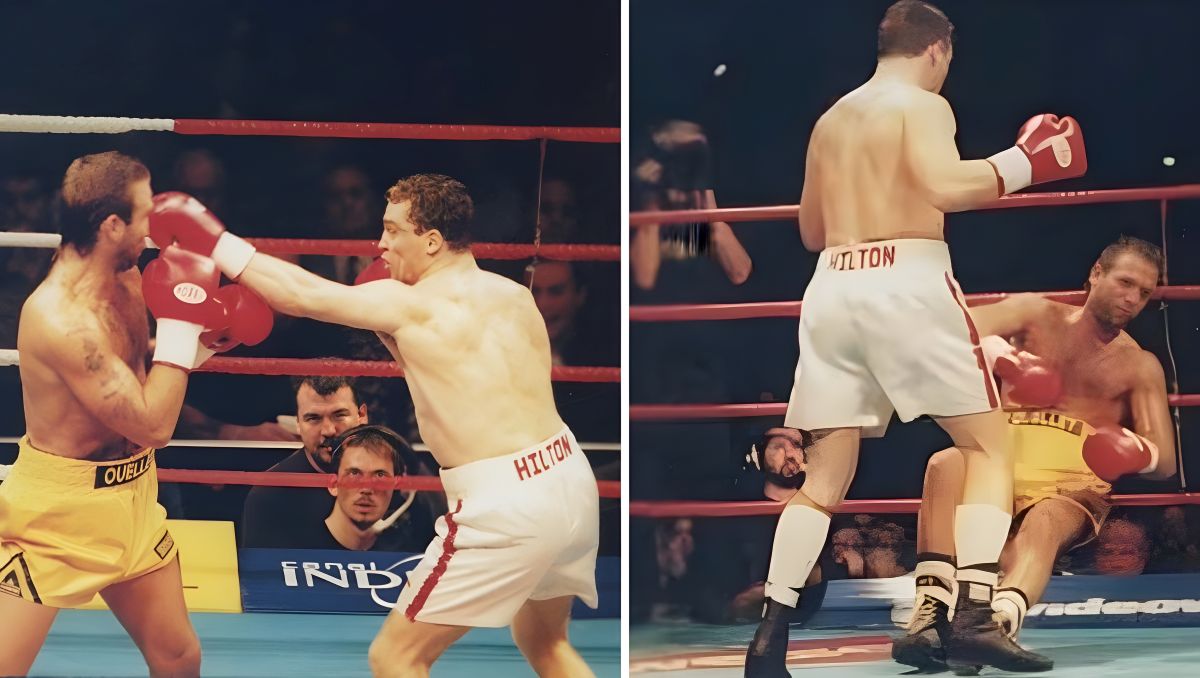
But the rivalry that turned Dave Hilton Jr. into a genuine Quebec superstar was the one with Stephane Ouellet.
Boxe Professionnelle Québécoise (BPQ) Richard Lecuyer Facebook group
By the late 1990s, two men owned the imagination of Quebec boxing: Stephane Ouellet, the francophone hero from the Saguenay, and Dave Hilton Jr., the anglophone provocateur from the Hilton clan. The contrast was a promoter’s dream, and the province bought in completely.
Ouellet crossed paths with a Hilton before he ever reached Dave. On April 3, 1998, at the Molson Centre, he knocked out Alex Hilton in three rounds for the vacant Canadian middleweight title, before 11,582 fans. That card has its own place in Quebec history: it was the first show ever staged by a new promotion company called InterBox, which invited Jake LaMotta, Archie Moore, Yvon Durelle and Beau Jack as guests, with former Prime Minister Brian Mulroney in the crowd. Alex was gracious in defeat, calling Ouellet a fighter with “the class of a world number-two contender.” Ouellet announced he was done with the Hiltons and moving on to bigger things. He would come to regret the phrase.
November 27, 1998: Dave Hilton Jr. against Stephane Ouellet, for the Canadian middleweight title, at a Molson Centre holding some 15,000 fans, televised in the United States on ESPN2’s Friday Night Fights. What followed is one of the most famous fights in Canadian history, and ESPN’s retrospective tells it round by round: the taller Ouellet boxed his way into an early lead, and Hilton broke his nose in the third. Ouellet fought nine rounds with a broken nose, and the blood turned Hilton’s white trunks crimson. After eleven rounds, Ouellet led on all three cards, 106-103, 106-103 and 107-102. He was the WBC’s number-one middleweight contender, with a world title shot being lined up.
Then, with eighteen seconds left in the fight, Hilton connected with a right hand. Ouellet sagged into the ropes, Hilton unloaded the follow-up barrage, and referee Denis Langlois jumped in to stop it at 2:42 of the twelfth. Ouellet’s cornermen were outraged, and the stoppage has been argued about in Quebec ever since. For Ouellet, the defeat was a catastrophe: the WBC title shot evaporated, and by his own later account he spiraled back into alcohol and drugs. For Dave Hilton Jr., it was the night he became a legend in his hometown.
The rematch, on May 28, 1999, was all Hilton: a third-round stoppage, the referee waving it off at 2:48.
The trilogy’s final chapter came on September 8, 2000, when a focused Ouellet dominated over ten rounds and took the unanimous decision, with cards of 99-90, 100-89 and 99-90. Two wars won by Hilton, one redemption won by Ouellet. The rivalry closed with the fighters even, and the province enthralled.
A few months later, Dave Hilton Jr. got the night that defined his career.
December 15, 2000: world champion at 37, after a 19-year wait
Dave Hilton Jr. had waited nineteen years for a world title shot. He got it at the Molson Centre against Dingaan Thobela of South Africa, the “Rose of Soweto,” who had just knocked out Glenn Catley to win the WBC super middleweight title, and whose team viewed the 37-year-old Hilton as an easy first defense. Thobela’s trainer announced at the pre-fight press conference that the bout would not go the distance. Hilton, a noted puncher with 26 knockouts in 38 wins, smiled and answered with one word: “Good.”
The fight went twelve rounds, in front of 9,569 fans, on pay-per-view in Canada and ESPN2 in the United States, with Catley, the number-one contender, watching incredulously from ringside. The judges split, with Julie Lederman scoring it 115-113 for Hilton and Barbara Perez 117-111, against Orea Schellenberger’s 115-113 for Thobela. Split decision. Dave Hilton Jr., world champion.
Both camps admitted the crowd may have played a part. Thobela was blunt: “The fans influenced the judges. There’s no question I won. I was surprised it was even a split.”
Hilton, holding the belt, gave the quote that ended up framing everything that came after: “This is for Quebec. I made a lot of mistakes in my life, so this is a present to Quebec to make up for it.”
Two brothers from one Montreal family had now been world boxing champions. Matthew at the IBF. Dave at the WBC. For a family that came up through a neighborhood gym on rue Monk, it is one of the rarest accomplishments in the entire history of the sport, in any country.
A belt he never defended
The reign would be brutally short, and the reason is not a boxing story.
In March 2001, Dave Hilton Jr. was convicted on all nine counts of sexual assault he faced, crimes committed against his two daughters between 1995 and 1998, starting when they were each 12 years old. On May 9, 2001, Judge Rolande Matte sentenced him to seven years in prison, citing the repeated nature of the abuse and his lack of remorse. The WBC’s 37-member board of directors voted unanimously to strip him of the title. He never made a single defense of the belt he had waited nineteen years to win.
Two things have to be held apart, and they are both true.
The historical fact: Dave Hilton Jr. was WBC super middleweight champion of the world.
The judicial fact: he was convicted of serious sexual crimes against children, who later told their story publicly.
Recognizing the first does not excuse the second, and reporting the second does not erase the first. Everything in this family’s story asks the reader to keep that discipline.
He was granted parole in May 2006 and released that June. On May 1, 2007, at 43, he returned to the ring at the Maurice Richard Arena in Montreal and won a unanimous ten-round decision over Adam Green, with cards of 98-91, 97-92 and 98-91. The Globe and Mail reported that he was announced as “The Comeback Kid” to a mix of boos and cheers. He finished with a career record of 41 wins, 2 losses and 2 draws, with 26 knockouts. His only two losses inside the ring were to Stephane Ouellet and Alain Bonnamie, both of whom he also beat.
Alex Hilton: champion at 18, and everything after
Alex Hilton’s story is the family’s story compressed.
He was born in LaSalle on December 20, 1964, and turned professional in 1982. On December 4, 1983, at 18, he knocked out Ralph Hollett of Halifax to win the vacant Canadian middleweight title. He stopped Deano Clavet twice in 1984, and knocked out Shawn O’Sullivan, the celebrated Canadian Olympic star, in 1992. He fought everyone the Quebec circuit had, from Eric Lucas to Stephane Ouellet, twice.
The years outside the ring consumed everything else. The Canadian federation stripped him of his title in January 1985 for missing a defense deadline. He then lost nearly six years of his career to jail terms and alcohol rehabilitation stays, the longest sentence being five years in the notorious Bordeaux jail case, in which he presided over a kangaroo court that ordered the assault of a fellow inmate. In 2007 he received six months for assaulting and threatening a police officer. The Montreal Gazette’s later headline about him was the family’s whole biography in one line: gifted with talent, cursed by alcohol.
Alex Hilton retired on December 17, 2004, after a knockout loss at the Bell Centre, the last Fighting Hilton to leave the ring, with a record of 37 wins and 11 losses. He died on April 7, 2026, at 61. The Globe and Mail’s obituary called him part of a troubled Quebec fighting clan, which is precise and understated at once.
The Fighting Hiltons: the family that shook the rings of Montreal and the United States
A chronology of the fights that built the legend
Matthew Hilton
February 15, 1986: knocks out Wilfred Benitez in nine rounds, Paul Sauvé Arena, Montreal.
June 13, 1986: outpoints Aniseto Ramos, Madison Square Garden, New York.
November 22, 1986: stops Franklin Owens in two rounds, Las Vegas Hilton.
December 12, 1986: knocks out William Clayton in two rounds, Madison Square Garden.
June 27, 1987: defeats Buster Drayton by unanimous decision over fifteen rounds at the Montreal Forum and wins the IBF junior middleweight title, on ABC in the United States.
October 16, 1987: stops Jack Callahan in two rounds in Atlantic City, on the undercard of Tyson versus Biggs, retaining the title.
July 29, 1988: knocks out Paul Whittaker in four rounds, Caesars Palace, Las Vegas.
November 4, 1988: loses the IBF title to Robert Hines by unanimous decision over twelve rounds, Las Vegas Hilton.
October 10, 1989: stops Tim Williams in ten rounds, Bally’s, Las Vegas.
January 1990: loses to WBO middleweight champion Doug DeWitt by eleventh-round retirement, on the Foreman-Cooney undercard.
Career: 32-3-2, 24 knockouts.
Dave Hilton Jr.
1981: turns professional as a teenager.
December 4, 1983: technical draw with Mario Cusson before about 20,000 at the Forum.
March 25, 1984: knocks out Cusson in 29 seconds to win the Canadian welterweight title, Forum attendance 19,807.
1990 to 1997: the Alain Bonnamie series, a loss, a win and a draw.
November 27, 1998: stops Stephane Ouellet at 2:42 of the twelfth round for the Canadian middleweight title, Molson Centre, before some 15,000 fans.
May 28, 1999: stops Ouellet in three rounds in the rematch.
February 29, 2000: decision win over Eddie Hall, Montreal.
September 8, 2000: loses to Ouellet by unanimous decision over ten rounds.
December 15, 2000: beats Dingaan Thobela by split decision for the WBC super middleweight title at the Molson Centre.
March to May 2001: conviction, seven-year sentence, title stripped by unanimous WBC vote.
May 1, 2007: comeback win over Adam Green by unanimous decision, Maurice Richard Arena, Montreal.
Career: 41-2-2, 26 knockouts.
Alex Hilton
1982: turns professional.
December 4, 1983: knocks out Ralph Hollett for the vacant Canadian middleweight title, at 18.
1984: stops Deano Clavet twice.
January 1985: stripped of the title for missing a defense deadline.
March 17, 1992: knocks out Shawn O’Sullivan in ten rounds, Forum.
June 29, 1996 and April 3, 1998: two fights with Stephane Ouellet, losses by corner retirement and knockout, the second before 11,582 fans at the Molson Centre.
October 13, 1999: loses a decision to Eric Lucas at the Molson Centre.
February 1, 2002: challenges Bryon Mackie for the vacant Canadian middleweight title, loses a decision. Later that year, final fight with Alain Bonnamie.
December 17, 2004: retires after a knockout loss to Adam Green at the Bell Centre.
Career: 37-11. Died April 7, 2026.
Why American fans should care about the Hiltons
For an American fight fan, the Hilton saga has every ingredient of a great boxing story, and the difference is that all of it is true.
A whole family in one sport.
A father as trainer. Five boys raised in neighborhood gyms. Canadian titles, then world titles. The Montreal Forum, the Molson Centre, Madison Square Garden, Las Vegas, Atlantic City. Don King. Bob Arum. Mike Tyson and Cus D’Amato. Broadcasts on ABC, HBO, Showtime and ESPN2. A commission of inquiry. An unsolved murder. And the tragic personal endings, which the family’s own members have discussed with unusual honesty.
One mistake to avoid: the Hiltons are not interesting only because of their controversies. They could genuinely fight. Matthew Hilton really was a world champion who beat a future Hall of Famer and defended his belt on a Tyson undercard. Dave Hilton Jr. really did beat a world champion in front of his hometown after nineteen years of trying. Alex Hilton really was a national champion at 18. And the family really did help make Montreal a significant boxing city in North America, good enough to fill the Forum with 20,000 fans for a domestic title fight, something no American city outside the very top tier could do.
A bridge between two worlds
What makes the Hiltons unusual is that they became a bridge between two boxing worlds that rarely touched.
On one side: Montreal. The neighborhood gyms, rue Monk, the Forum, the Quebec public that packed arenas for local grudge matches.
On the other: New York, Las Vegas, Atlantic City, ABC and HBO, Don King and Bob Arum, Tyson undercards and a rumored Sugar Ray Leonard mega-fight with a $7 million purse attached.
Very few Canadian fighters of the era actually made that crossing. The Hiltons lived in both worlds for twenty years. Matthew’s own account of the King years, riding Tyson undercards while his brother headlined at home, is one of the best descriptions of how the American boxing market actually worked in the late 1980s. If you want to understand the era of Don King at his peak, from the fighter’s side of the table, the Hilton file is one of the most instructive case studies in North American boxing.
Not a family to reduce to its scandals, and not one to idealize either
It is easy, today, to look at the Hiltons only through their controversies. It would be equally wrong to look at them only through their belts.
The family produced two world champions from a single set of brothers, which is exceptional anywhere in the world. It filled arenas for two decades, and it left its mark on the biggest stage in the sport. It also produced Stewart’s death at 17, Alex’s lost years, Dave Jr.’s conviction, and a long documented history with the worst corners of the fight game, which the youngest brothers entered at an age when most people are choosing what to study.
Their story shows both sides of an era. A fighter from a Montreal neighborhood gym really could reach the top of the world. And that same world could take a family of young athletes and run them through contracts, promoters, rivalries, money and powerful men with no protection at all, while commissions and police looked the other way. The Bernier inquiry exists because everyone now knows that second part was true too.
The two images, side by side, are the whole story. The first: June 27, 1987, the Montreal Forum, fifteen rounds, a 21-year-old who refuses to go backward, his father in the corner, a world title at the end of the night. The second: everything that happened to the family afterward, on the other side of the ring ropes.
Conclusion: were the Fighting Hiltons a great boxing family? Yes. Without hesitation, and beyond the question.
Two world champions from one set of brothers is a feat almost no family in boxing history can claim. Matthew Hilton is one of the great Montreal champions of all time, and the man whose title reign opened the door for every Quebec champion who followed. Dave Hilton Jr. reached the top of the world on his own terms, in a career that ended in the worst possible way outside it. Alex Hilton was a national champion at 18 and a professional fighter for over two decades. Behind all three stands a father who devoted his life to building them, whatever anyone thinks of him or of the company he kept.
For an American fan, the Fighting Hiltons deserve to be remembered as a real North American boxing family. Not a perfect family. Not one to idealize.
But one that genuinely left its mark on the sport, from the gyms of rue Monk to the Montreal Forum to the Madison Square Garden to the Las Vegas Hilton, through Don King, Mike Tyson and everything in between.
And when people talk about the golden age of Quebec boxing, it is impossible to tell that story without three words.
Michael Thomas Jr. is a grizzled wordsmith hailing from the wilds of Alberta, where the Rocky Mountains whisper secrets of freedom and frontier spirit straight into his ear—probably while he's sipping a black coffee laced with unfiltered patriotism. As Cocaine Company's resident editorialist on Canadian and American geopolitics,