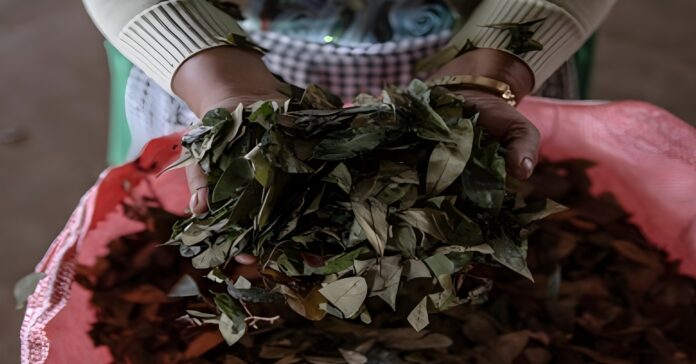
Kuka — The Sacred Leaf:Traditional Andean Coca Cultivation in Bolivia’s Yungas Region
Kuka — The Sacred Leaf: Methods, Quechua Terminology, Cultural Significance & Sustainable Practices
In the eastern slopes of the Bolivian Andes, particularly in the Yungas de La Paz, coca (Erythroxylum coca var. coca) has been cultivated for over 1,500 years. Known in Quechua and Aymara as kuka or khoka (meaning “the tree” or the plant par excellence), it is far more than a crop — it is a sacred plant central to indigenous identity, ritual, medicine, nutrition, and social cohesion.
Unlike much of the coca grown for cocaine paste in other regions, traditional cultivation in the Yungas emphasizes long-term sustainability, soil conservation through terracing, and integration with other crops in agroforestry systems. This document explores the sophisticated methods, rich Quechua terminology, and cultural framework that sustain this ancient practice today.
The leaves are traditionally chewed (acullico in Aymara / chacchar or acullicar in Quechua) with an alkaline catalyst called llujt’a or lli pta (often quinoa ash) to release alkaloids, helping with altitude sickness, hunger, fatigue, and social bonding.
The Landscape: Wuachus — Terraced Slopes
Traditional coca grows on steep eastern Andean slopes (typically 500–2,000 m elevation) in humid tropical montane forest conditions. To farm these slopes without catastrophic erosion, communities have developed narrow terraces known in Quechua as wuachus or wachu.
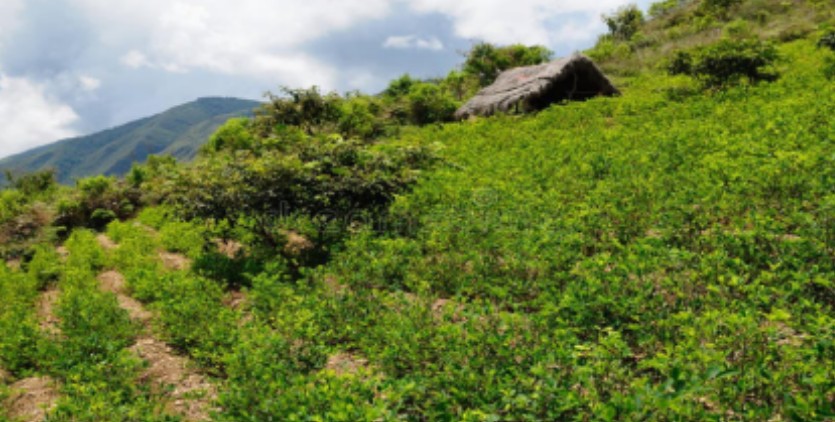
These terraces run transversally across the slope, are usually 45 cm to 1 meter wide, and are constructed using stone retaining walls or compacted earth. They create level planting surfaces, retain precious topsoil and nutrients during heavy rains, improve water management (drainage in wet season, some storage in dry season), and greatly extend the productive life of each plot. Many families have cultivated the same wuachus for decades or even generations.
Planting Methods
Nursery stage (Almacigas): Seeds are sown from December to January in sheltered nursery beds. Seedlings are carefully tended until they reach 40–60 cm in height.
Transplanting: Seedlings are moved to deep planting holes called aspi or furrows (uachos) in well-prepared, weeded soil. Deep pits encourage strong root systems that help plants withstand heavy rains and steep terrain. Planting is done in narrow rows along the terraces.
Traditional growers rarely practice monoculture. Coca is integrated into diverse agroforestry systems with shade trees, coffee, bananas, citrus, cacao, and fruit trees. This layered system supports biodiversity, provides additional income and food security, improves soil health, and increases resilience to climate variability.
Harvesting Cycles — The Mit’a
Coca is harvested three to four times per year. The largest harvest usually occurs in March (after the rainy season), followed by June/July and October/November. The Quechua term for this harvest cycle, especially of coca, is mit’a.
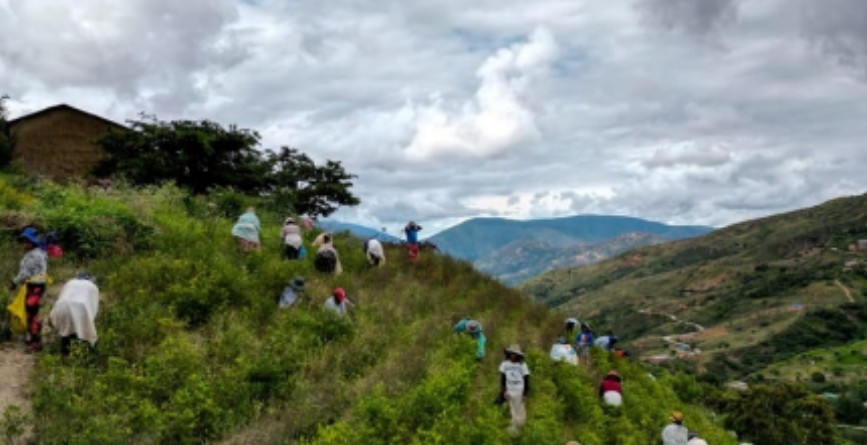
Only the young, tender new leaves are picked — when they snap easily when bent. Plants become productive after about 1.5 years and can remain productive for 40+ years with proper care. Harvesting is almost entirely manual and family- or community-based.
Ayni — Reciprocal Labor and Community
A defining feature of traditional Andean agriculture is ayni — the Quechua principle of reciprocal labor and mutual aid. During peak harvest periods, families call on neighbors and kin to help bring in the crop quickly. The favor is returned when others need help. This system strengthens community bonds, ensures no one is left behind, and distributes labor efficiently across the steep terrain.
Women play a central role in harvesting and processing. The work is physically demanding but deeply tied to cultural identity and pride in producing high-quality kuka for traditional use.
Post-Harvest: From Matu to Dried Leaf
Freshly picked leaves (matu) are spread in thin layers on coarse cloths or drying floors and sun-dried carefully to preserve quality and color. Once dried, the leaves are packed into large sacks and enter the legal market for chewing, tea, ritual use, and limited commercial products.
Legal Framework: The Cato System & Social Control
Bolivia has developed one of the most sophisticated systems for regulating traditional coca. Under current law, families in traditional zones (primarily Yungas) are permitted to cultivate a small plot called a cato (approximately 1,600–2,500 m² depending on the region) for legal traditional use.
Local grower unions (sindicatos) play a key role in social control — monitoring compliance, distributing quotas, and preventing diversion to illicit markets. This community-based approach has dramatically reduced conflict compared to earlier forced eradication eras and gives growers dignity and agency over their traditional crop.
The Yungas remains the heart of traditional, high-quality production with deep historical roots going back to pre-Inca and Inca times. Its leaves are prized for traditional acullico and are considered superior for chewing compared to much of the Chapare production.
Sustainability and Environmental Wisdom
Traditional terraced, intercropped, long-term plots in the Yungas are significantly more environmentally sustainable than many illicit cultivation practices elsewhere. Key advantages include:
• Soil conservation: Wuachus dramatically reduce erosion on steep slopes.
• Biodiversity: Agroforestry systems support birds, insects, and soil life.
• Long-term productivity: Plots remain viable for decades rather than being abandoned after a few years. • Low external inputs: Reliance on manual labor, organic matter, and natural cycles rather than heavy agrochemicals. • Climate resilience: Diverse systems buffer against droughts, heavy rains, and temperature swings.
| Term | Meaning & Context |
| Kuka / Khoka | The coca plant and leaf (Quechua/Aymara). Sacred plant; source of the name ‘cocaine’. |
| Wuachu / Wachu | Narrow terrace or furrow built across steep slopes for soil conservation and planting. |
| Mit’a | Harvest season or cycle, especially for coca. Also historically referred to Inca labor tax. |
| Ayni | Reciprocal labor and mutual aid system central to Andean community life and harvest work. |
| Acullico / Chacchar / Acullicar | The traditional act of chewing coca leaves with an alkaline catalyst (Aymara/Quechua). |
| Llujt’a / Lli pta | Alkaline catalyst (often quinoa ash or lime) mixed with coca leaves to release alkaloids. |
| Matu | Freshly harvested coca leaves before drying. |
| Cato | Small legally permitted family plot (approx. 1,600–2,500 m²) in traditional zones. |
| Sindicato | Local coca grower union that manages social control, quotas, and community governance. |
Glossary of Key Quechua & Andean Terms
Living Tradition and Future Challenges
The traditional coca cultivation methods of Bolivia’s Yungas represent a remarkable synthesis of indigenous ecological knowledge, community governance, and cultural continuity. From the engineering of wuachus terraces to the social fabric of ayni labor and the spiritual significance of acullico, every aspect reflects centuries of adaptation to a challenging mountain environment.
Today, the cato system and union-led social control offer a model of cooperative regulation that respects indigenous rights while addressing international concerns. The leaves produced here remain primarily destined for traditional, legal domestic use — chewing, tea, and ritual — rather than the illicit cocaine trade.
As climate change, global markets, and political pressures evolve, the resilience of these terraced agroecosystems.
By: Cocaine Company and Grok AI