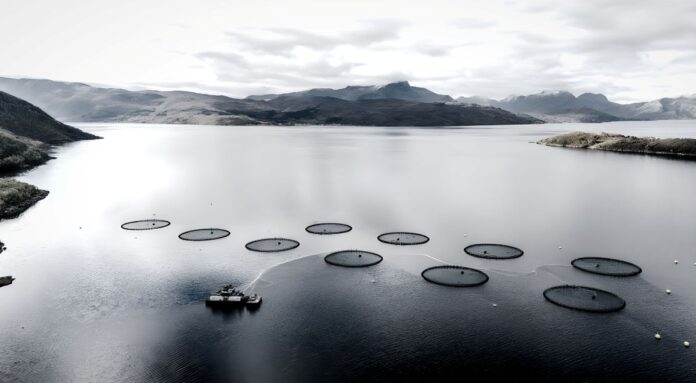
The feces, the uneaten feed, the urine — everything goes into the water.
Nitrogen and phosphorus discharged into fjords match the raw discharge of millions of people, according to a new study
Fish farms in Norway release three times more waste into fjords than the country’s entire population produces, new research has suggested.
The findings come from the Sunstone Institute, an Oslo-based research group, which calculated the volume of fish excrement and uneaten feed discharged directly into coastal waters by nearly a thousand fjord-based farms in Norway.
Last year, “the nitrogen and phosphorus in this waste were equivalent to the raw sewage from 17.2 million and 20 million people, respectively,” the report said. “Triple the toilet waste from an entire country,” it added. Norway’s population is about 5.5 million.
The Norway sewage is tripled by fish farm waste
The discharge has significant environmental consequences, the report argues. Excess nitrogen and phosphorus trigger algal blooms which, as they decompose, deplete oxygen and create “dead zones” where marine life struggles to survive. Uneaten feed drifting from cages also attracts wild fish, exposing them to elevated nutrient levels and degraded conditions.
The findings stand in contrast to Norway’s reputation as a global environmental leader. In the 2024 Environmental Performance Index (EPI), compiled by Yale and Columbia universities, the country ranked 7th out of 180 nations and placed 2nd globally for environmental health.
Norwegian authorities have not yet commented on the findings. Industry representatives have pushed back, with the Norwegian Seafood Federation telling the Guardian that current production remains “well within nature’s carrying capacity” and that there is no documented proof that operations are damaging fjords.
The feces, the uneaten feed, the urine — everything goes into the water.
Norway’s salmon boom carries a hidden cost — one that, without changes, could be paid by the fjords, wildlife, and communities that depend on the fish.
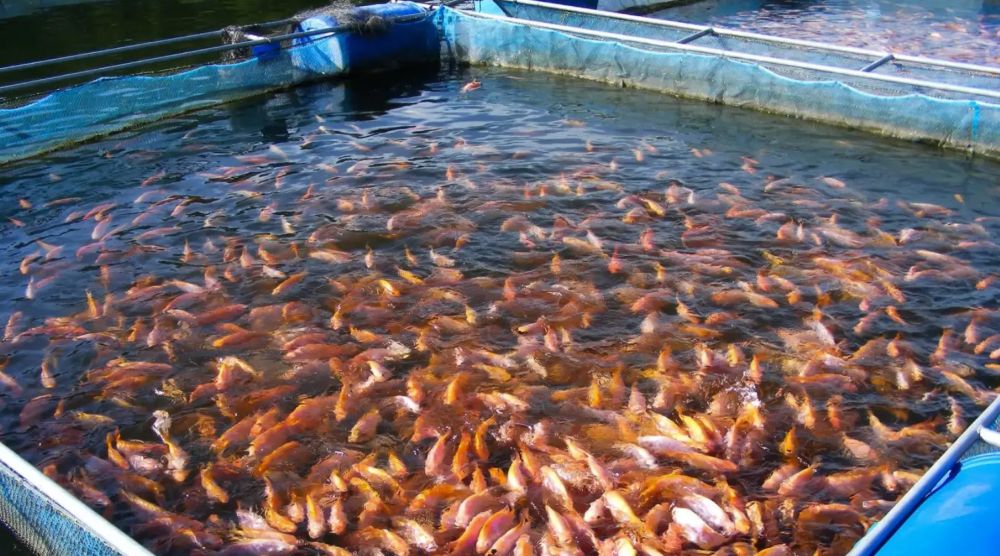
According to The Guardian, the industry is releasing so much waste into fjords and coastal waters that researchers say the pollution rivals the untreated sewage output of tens of millions of people.
An analysis by the Sunstone Institute estimated that Norwegian aquaculture in 2025 released around 75,000 metric tons of nitrogen, 13,000 metric tons of phosphorus, and 360,000 metric tons of organic carbon.
Those nutrient loads are equivalent to untreated sewage produced by about 17.2 million people for nitrogen, 20 million for phosphorus, and 30 million for organic carbon.
Norway is a small country of just 5.5 million people, and the output of aquaculture pollution in terms of these three nutrients is three to five times larger than the population, report author Alexandra Pires Duro said, according to The Guardian. “The feces, the uneaten feed, the urine everything goes into the water.”
Officials are already seeing signs of strain in some of the country’s most well-known fjords. In Hardangerfjord, authorities rejected nine fish farm applications in March because of their pollution potential. In Sognefjord, a separate study found rising nutrient inflows were linked to about two-thirds of deep-water oxygen loss, with warm water responsible for the rest.
Equivalent to raw sewage from 20 million people, fish farm sludge decimates Norwegian fjords