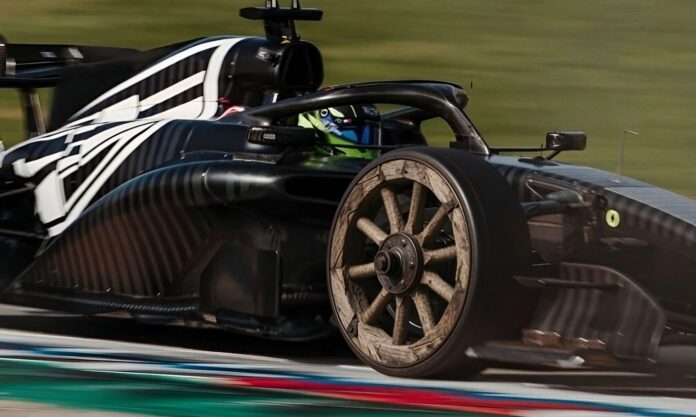
Both Cadillac cars have retired from the Hungarian Grand Prix. Bottas via the now-traditional brake fire, Pérez via suspension failure. Formula 1’s newest American entrant continues its remarkable consistency in the art of not finishing races.
Persistent Rearward Positioning: An Assessment of the Cadillac Formula 1 Team’s Recurrent Challenges at the 2026 Hungarian Grand Prix
Norris 1 : but WTF with Cadillac out out
The 2026 Hungarian Grand Prix at the Hungaroring once again placed the Cadillac Formula 1 Team at the rear of the field. Valtteri Bottas retired with overheating front brakes despite the introduction of targeted upgrades, while Sergio Pérez completed the race near or at the back. This outcome continues a pattern established since the team’s debut as Formula 1’s eleventh constructor. The result invites examination across levels of technical and sporting insight, linking the immediate performance deficit to broader structural, regulatory, and historical factors.
Foundational Context for New Observers
Formula 1 represents the pinnacle of single-seater motor racing, governed by the FIA and contested over a calendar of approximately two dozen grands prix. Each event combines high-speed aerodynamics, hybrid power units, and intense strategic management of tires, fuel, and energy deployment. The Hungarian Grand Prix, held at the tight and technical Hungaroring, emphasizes mechanical grip, precise chassis balance, and sustained braking performance rather than outright power. Overtaking is historically difficult, elevating the importance of qualifying position and race reliability.
Cadillac entered the championship in 2026 as a General Motors-backed constructor in partnership with TWG Motorsports. The team fields the MAC-26 chassis, powered by Ferrari customer units, and is led by team principal Graeme Lowdon. Its drivers, Valtteri Bottas and Sergio Pérez, bring extensive experience from previous campaigns with Mercedes, Sauber, and Red Bull Racing. For a debutant organization operating under the new 2026 technical regulations, consistent last-place finishes and zero constructors’ points to date constitute a measurable gap relative to established competitors such as Mercedes, Ferrari, and McLaren.
Norris 1 : but WTF with Cadillac out out
Race result by: Formula1
FORMULA 1 AWS HUNGARIAN GRAND PRIX
24 – 26 Jul 2026 Hungaroring, Budapest
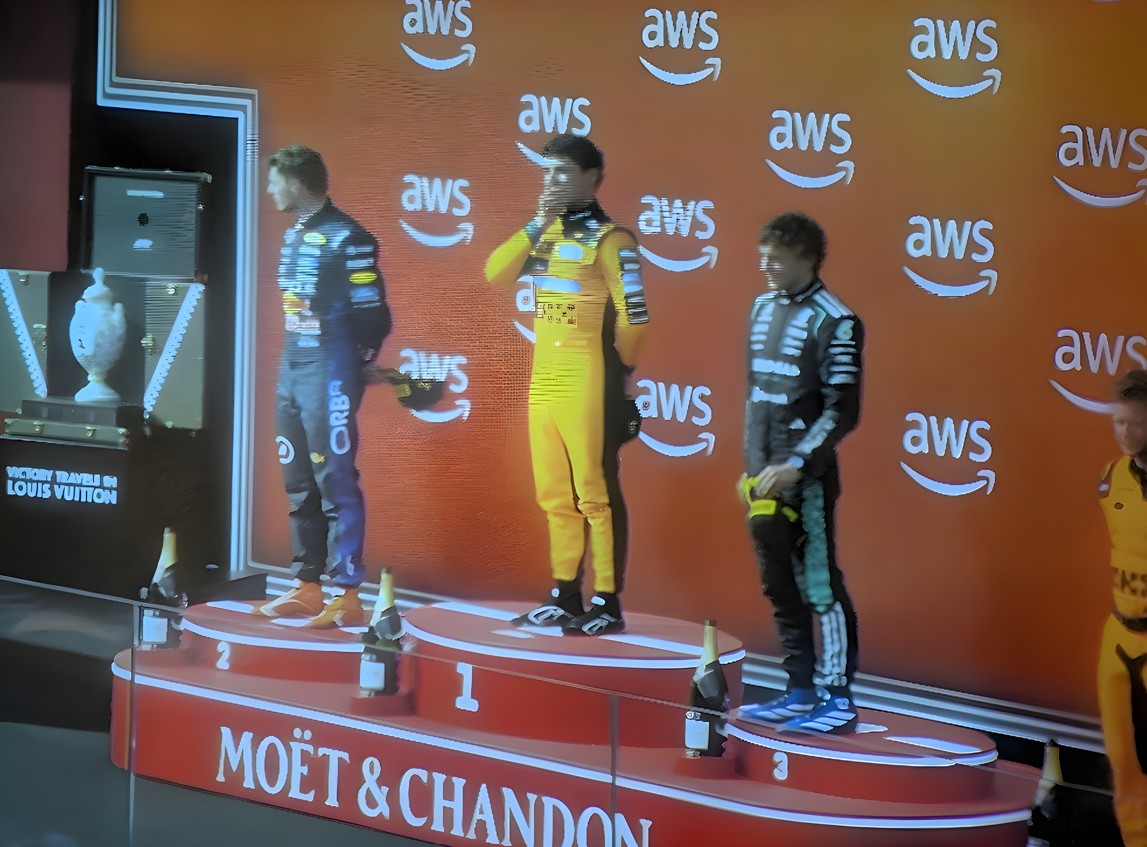
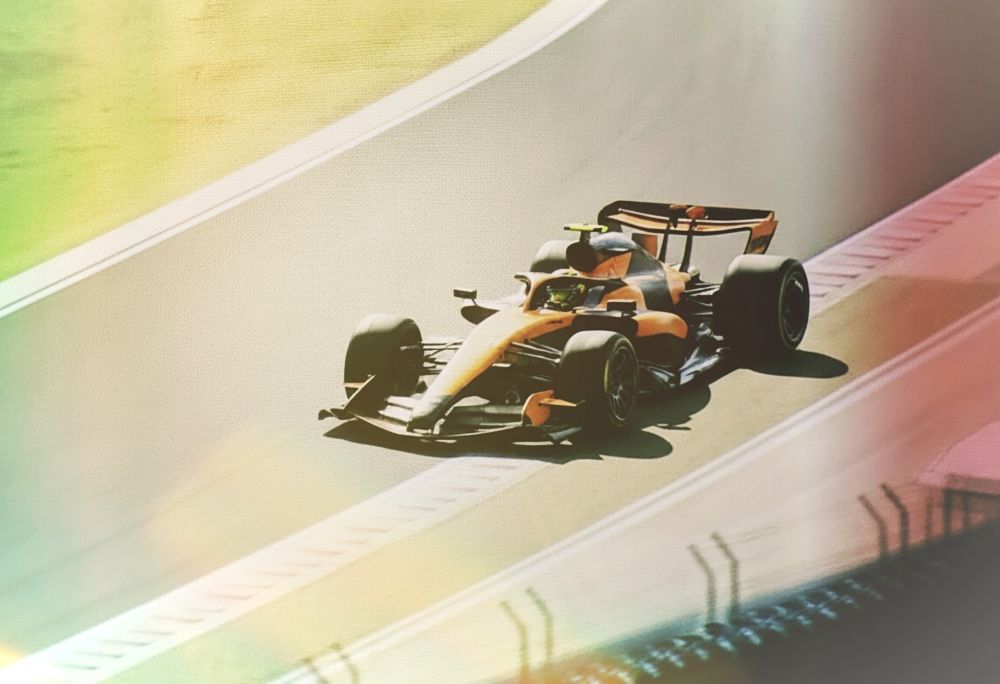
Lando Norris claimed his and McLaren’s first Grand Prix victory of 2026 in Sunday’s Hungarian Grand Prix, taking the chequered flag ahead of Red Bull’s Max Verstappen and Mercedes’ Kimi Antonelli after mid-race drama and a late retirement for team mate Oscar Piastri.
| Pos. | No. | Driver | Team | Laps | Time / Retired | Pts. |
|---|---|---|---|---|---|---|
| 1 | 1 |  Lando Norris Lando Norris |
 McLaren McLaren |
70 | 1:39:56.180 | 25 |
| 2 | 3 |  Max Verstappen Max Verstappen |
 Red Bull Racing Red Bull Racing |
70 | +15.080s | 18 |
| 3 | 12 |  Kimi Antonelli Kimi Antonelli |
 Mercedes Mercedes |
70 | +18.728s | 15 |
| 4 | 16 |  Charles Leclerc Charles Leclerc |
 Ferrari Ferrari |
70 | +23.840s | 12 |
| 5 | 44 | 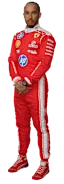 Lewis Hamilton Lewis Hamilton |
Ferrari |
70 | +24.540s | 10 |
| 6 | 6 |  Isack Hadjar Isack Hadjar |
Red Bull Racing |
70 | +55.488s | 8 |
| 7 | 63 |  George Russell George Russell |
Mercedes |
70 | +57.503s | 6 |
| 8 | 30 |  Liam Lawson Liam Lawson |
 Racing Bulls Racing Bulls |
69 | +1 lap | 4 |
| 9 | 27 | 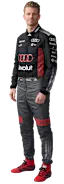 Nico Hulkenberg Nico Hulkenberg |
 Audi Audi |
69 | +1 lap | 2 |
| 10 | 41 |  Arvid Lindblad Arvid Lindblad |
Racing Bulls |
69 | +1 lap | 1 |
| 11 | 5 | 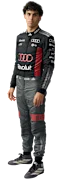 Gabriel Bortoleto Gabriel Bortoleto |
Audi |
69 | +1 lap | 0 |
| 12 | 10 |  Pierre Gasly Pierre Gasly |
 Alpine Alpine |
69 | +1 lap | 0 |
| 13 | 18 | 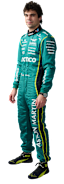 Lance Stroll Lance Stroll |
 Aston Martin Aston Martin |
69 | +1 lap | 0 |
| 14 | 14 |  Fernando Alonso Fernando Alonso |
Aston Martin |
69 | +1 lap | 0 |
| 15 | 43 |  Franco Colapinto Franco Colapinto |
Alpine |
68 | +2 laps | 0 |
| 16 | 31 |  Esteban Ocon Esteban Ocon |
 Haas F1 Team Haas F1 Team |
68 | +2 laps | 0 |
| 17 | 23 |  Alexander Albon Alexander Albon |
 Williams Williams |
68 | +2 laps | 0 |
| 18 | 55 |  Carlos Sainz Carlos Sainz |
Williams |
68 | +2 laps | 0 |
| 19 | 87 |  Oliver Bearman Oliver Bearman |
Haas F1 Team |
68 | +2 laps | 0 |
| NC | 81 |  Oscar Piastri Oscar Piastri |
McLaren |
55 | DNF | 0 |
| NC | 11 |  Sergio Perez Sergio Perez |
 Cadillac Cadillac |
48 | DNF | 0 |
| NC | 77 |  Valtteri Bottas Valtteri Bottas |
Cadillac |
13 | DNF | 0 |
Intermediate Analysis of Operational and Competitive Realities
Across the opening races of the season, Cadillac has occupied the final positions in both qualifying and race classification with striking regularity. Reliability failures, particularly involving brake systems, have produced multiple early retirements, including both cars in Austria and Bottas again in Hungary. The Hungaroring’s sequence of medium- and high-speed corners generates repeated heavy braking loads; the team’s decision to introduce revised brake drums and cooling components ahead of the event was therefore logical. That these measures proved insufficient underscores the difficulty of resolving thermal management issues within the constraints of a customer power-unit package and a chassis developed under compressed timelines.
The 2026 regulations introduced significant changes to chassis dimensions, aerodynamic concepts, and power-unit architecture. New teams face the dual burden of learning these rules while simultaneously constructing operational infrastructure, supply chains, and simulation capability. Cadillac’s zero-point standing after the Hungarian round places it behind even other struggling outfits such as Aston Martin in the constructors’ classification. The presence of experienced drivers has mitigated some learning-curve effects, yet the repeated inability to complete race distances without thermal failure limits data collection and development feedback. Pérez’s pit-lane start after parc fermé changes further illustrates the reactive nature of the team’s current engineering cycle.
These difficulties connect directly to the broader ecosystem. Ferrari’s supply of power units and gearboxes provides a proven foundation, yet customer teams historically operate with restricted access to the full suite of development tools available to work squads. Comparisons with earlier American or under-resourced entries, such as the early seasons of Haas, reveal similar patterns of reliability prioritization over peak performance. The Andretti legacy, honored in the chassis designation, adds symbolic weight but does not alter the engineering realities of a first-year program.
Advanced Technical and Strategic Considerations
At a deeper level, the brake overheating episodes highlight fundamental trade-offs in contemporary Formula 1 design. Effective brake cooling requires duct volume and airflow that compete directly with aerodynamic efficiency. In an era of highly optimized floor and diffuser designs under the 2026 rules, enlarging cooling apertures imposes a measurable downforce or drag penalty. Bottas has publicly noted the necessity of accepting such a compromise to ensure race finishes. The persistence of the problem after Hungary upgrades suggests either insufficient correlation between simulation and track thermal loads or manufacturing tolerances that remain outside acceptable limits for sustained grand prix distances.
Looking forward, the team’s resource allocation is already shifting toward the 2027 car and the longer-term objective of becoming a power-unit manufacturer in 2029. This strategic pivot is rational for a manufacturer-backed entity, yet it risks prolonging the current season’s competitiveness deficit. Historical precedent shows that new constructors rarely escape the rear of the field within a single campaign; the combination of regulatory complexity, supply-chain maturity, and correlation work typically requires multiple seasons. Cadillac’s situation is further complicated by the absence of points-scoring opportunities that would otherwise fund accelerated development under the current budget-cap framework.
The Hungarian result therefore functions as more than an isolated disappointment. It crystallizes the intersection of chassis thermal design, customer power-unit constraints, regulatory transition costs, and the organizational maturation required of any eleventh-team entrant. Until fundamental reliability is secured, the team’s experienced drivers and ambitious long-term plans remain secondary to the elementary requirement of completing race distances. The pattern observed at the Hungaroring is neither anomalous nor temporary; it is the measurable consequence of the structural conditions under which Cadillac currently competes