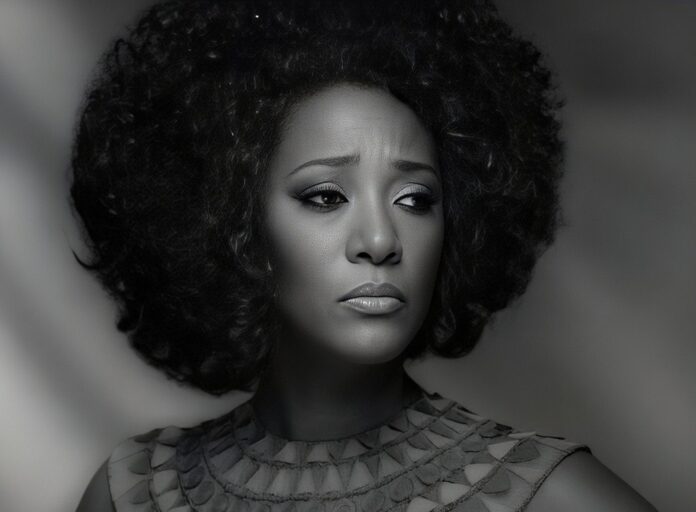
Marlena Shaw: Who Is This Bitch Anyway ?
Yeah, we know what you thought when you saw the title. “Who Is This Bitch Anyway?” You probably smirked, scrolled, or clutched your pearls for half a second. Perfect. That’s exactly the reaction Marlena Shaw wanted in 1975 when she slapped those five words on her Blue Note masterpiece and dared the entire music industry to deal with it.
While every other jazz diva was busy being “classy” or “sultry” for the suits, Marlena opened her mouth and reminded everyone what a real voice sounds like — rich, filthy, powerful, emotional, and completely unafraid. She could scat like a horn player on fire, drop from velvet growl to razor-sharp belt in the same breath, and make a song about ghetto life or bedroom politics feel like a personal confession and a middle finger at the same time.
And yet… she never became the household name her talent screamed she should be. That’s the delicious, infuriating part. A voice this fabulous, sampled by everyone from Gang Starr to Adidas commercials, turned into rare-groove scripture in the UK, and still somehow flying under the radar while lesser talents got the stadiums and the Grammys.
At Cocaine Company we crown Bitches of the Month who expose the real addictions — mediocrity, fake packaging, and an industry that punishes anyone who refuses to shrink. Marlena Shaw didn’t sell pharmaceutical dreams or kiss politician rings. She just sang the truth so hard it made executives nervous. That’s why she’s our bitch this month. And the album that proves it forever is the one we’re diving deep into right now: the 1975 Blue Note release that carries the same name as this headline.
Let’s go back to 1975. Marlena Shaw had already paid her dues
—
Chicago Playboy Club grind in the late ’60s, Chess/Cadet soul hits like the immortal “California Soul” in 1969, a quick but fiery stint with the Count Basie Orchestra, and then the move to Blue Note in 1972 as the first woman they ever signed. She’d proven she could do straight jazz, soul, pop, blues, anything. But the suits still didn’t know what to do with her. Too real. Too black. Too woman. Too much.
So she walked into the studio with producer Bernard Ighner and made Who Is This Bitch, Anyway? — a ten-track gut-punch that still feels dangerous fifty years later. The album opens with a spoken skit called “You, Me and Ethel / Street Walkin’ Woman.” Marlena’s voice comes in casual, almost conversational, roasting some no-good man while the band eases in behind her. It’s funny, it’s street, it’s feminist before most people even knew the word. Then it explodes into full jazz-soul fire.
Provided to YouTube by Universal Music Group
Track after track she refuses to play the game. “Feel Like Makin’ Love” — yes, that one — gets stripped down and rebuilt into something raw and hungry, nothing like the soft-rock version everyone else was doing. “The Lord Giveth and The Lord Taketh Away” is pure ghetto sermon delivered with church-power vocals that make you believe every word.
“You Taught Me How to Speak in Love” flips from tender to fierce in seconds. And the title track? It’s not even a song — it’s a statement. A question the entire industry was too scared to answer.
But the real knife in the ribs is “Woman of the Ghetto.” If you’ve only heard the samples (and trust me, every hip-hop head has), you’ve missed the original. Marlena doesn’t just sing it — she lives it. She spits lines about welfare lines, absent fathers, and survival with a voice that swings between sorrow and pure rage. It’s the kind of performance that makes you stop whatever you’re doing and just feel it. No auto-tune. No safety net. Just one woman and a band laying the truth on the table.
And that voice — fu_k, that voice. Critics compared her to Dinah Washington and Sarah Vaughan for a reason. She had the technical precision of a jazz master, the emotional range of a gospel queen, and the swagger of a street poet.
She could improvise scat runs that sounded composed, drop into low growls that vibrated in your chest, then soar into high notes that cut through smoke-filled clubs like a spotlight. Live, she was even more dangerous. People who saw her at the Playboy Club or on the Basie bandstand still talk about nights where the entire room forgot to drink because they were too busy staring at the stage.
Yet somehow the mainstream never fully embraced her. Chart positions? The album peaked at #159 on Billboard 200, #47 R&B, #8 Jazz. Respectable for jazz, but laughable when you hear the music. Why? Because the industry loves to package and control. They wanted “safe soul” or “polite jazz.” Marlena gave them neither. She blended everything — funk, jazz, blues, spoken word, social commentary — and dared them to sell it. They couldn’t. So they gave her moderate success, a couple more Blue Note albums, then shuffled her off to Columbia in ’77 where she scored another minor hit with her fiery feminist rewrite of
“Go Away Little Boy.”
Yu-Ma / Go Away Little Boy · Marlena Shaw Sweet Beginnings (Expanded Edition) ℗ 1977 Columbia Records, a division of Sony Music Entertainment Released on: 1977-02-01 Associated Performer: Marlena Shaw Lyricist, Composer: Carole King Lyricist, Composer: M. Shaw Lyricist, Composer: Gerry Goffin
Fast-forward and the irony gets even sweeter. While the Grammys slept and radio ignored her, hip-hop producers treated her like buried treasure.
Her vocals ended up on tracks by everyone from Gang Starr to Massive Attack to countless underground cuts. Woman of the Ghetto “became a rare-groove anthem in the UK. “California Soul” still moves product in KFC and Dodge Ram commercials decades later. Adidas used her voice. Her music became the soundtrack for people who actually dig crates instead of chasing trends.
She kept performing right up until her death on January 19, 2024, at age 84.
No farewell tour, no Netflix documentary, no viral TikTok moment. Just a voice that outlived every trend it was ever too good for.
That’s the Marlena Shaw story in a nutshell. A fabulous jazz singer with an unbelievable instrument who never got the crown the world owed her. The industry judged the title before they listened to the voice — exactly the same shallow shit people still do today.
Who Is This Bitch Anyway? wasn’t arrogance. It was a challenge: stop looking at the packaging and hear what’s inside.
At Cocaine Company we hear it loud and clear. We don’t crown bitches because the world already did. We crown them because the world forgot to pay attention.
Marlena Shaw never asked for permission. She never softened her edges. She just opened her mouth and let that ridiculous voice do the talking.
So next time you hear a sample or catch “California Soul” in a commercial, remember the woman behind it. The one who titled her masterpiece after the very question the suits were too scared to ask. The one whose voice still sounds fresher than 90 % of what’s on the radio right now.
Who is this bitch anyway?
She’s Marlena Shaw.
And she’s our Bitch of the Month.
_____________________
Who Is This Bitch Anyway? Bitch of the Month: Marlena Shaw
A true icon of jazz, Marlena Shaw personifies the blend of versatility and charisma. Her distinctive sound, prominently featured on Blue Note Records, seamlessly fuses pop standards with sophisticated jazz tunes. Known for her extroverted stage presence, Marlena Shaw truly comes alive in live performances, solidifying her legacy as a captivating and timeless performer.
After her uncle Jimmy Burgess introduced her to the recordings of Dizzy Gillespie and Miles Davis,
She caught the jazz bug and purchased records by Al Hibbler, a vocalist who had a big influence on her singing style. When she was ten she performed at Harlem’s Apollo Theater, and despite the enthusiastic reception she received in front of one of the world’s toughest audiences, her mother refused to let her go on the road with her uncle, a trumpet player. Shaw attended the State Teachers’ College in Potsdam, NY, but later dropped out. For some time in 1963 she worked around New England with a trio led by Howard McGhee. By the mid-’60s she was performing regularly for audiences in the Catskills, Playboy clubs, and other New York area clubs. In 1966, she recorded “Mercy, Mercy, Mercy” for Cadet Records, and the single sold very well for an unknown singer. The single’s success, a rare vocal version of the tune, prompted executives at Cadet to encourage her to record a whole album for the label in 1967. The diversity of styles, including blues, jazz, and pop standards, is reflected in the album’s title, Out of Different Bags. Through her accountant, she was brought to the attention of bandleader Count Basie, and she ended up singing with the Basie band for four years.
In 1972, after leaving the Basie Orchestra, Shaw was the first female vocalist signed to Blue Note Records, and she toured for a while with the late Sammy Davis Jr. Shaw recorded five albums and several singles for Blue Note, and critics likened her singing style to Dinah Washington and Sarah Vaughan. At her club shows, Shaw dazzled audiences with her intoxicating blend of straight-ahead jazz, soul, pop, and classic R&B, but her recordings will also satisfy fans of traditional jazz who have no prejudices about blues and R&B. Richard Skelly
By Blue Note Records