
The One-Dollar Revolution: How Coca-Cola’s Bottling System Became the Most Powerful Franchise Model in Business History
How a $1 Deal Built the Coca-Cola Bottling Empire (1899–Today)
In the summer of 1899, a brief meeting in Atlanta set into motion one of the most consequential business model transformations in American history. The Coca-Cola Company, then a modest syrup manufacturer under the leadership of Asa Griggs Candler, signed away its bottling rights for a nominal one dollar. The recipients two Chattanooga attorneys, Benjamin F. Thomas and Joseph B. Whitehead left Atlanta with a perpetual contract that Candler considered a harmless gesture.
He was wrong.
The agreement they carried home would become the operating system for a global empire.
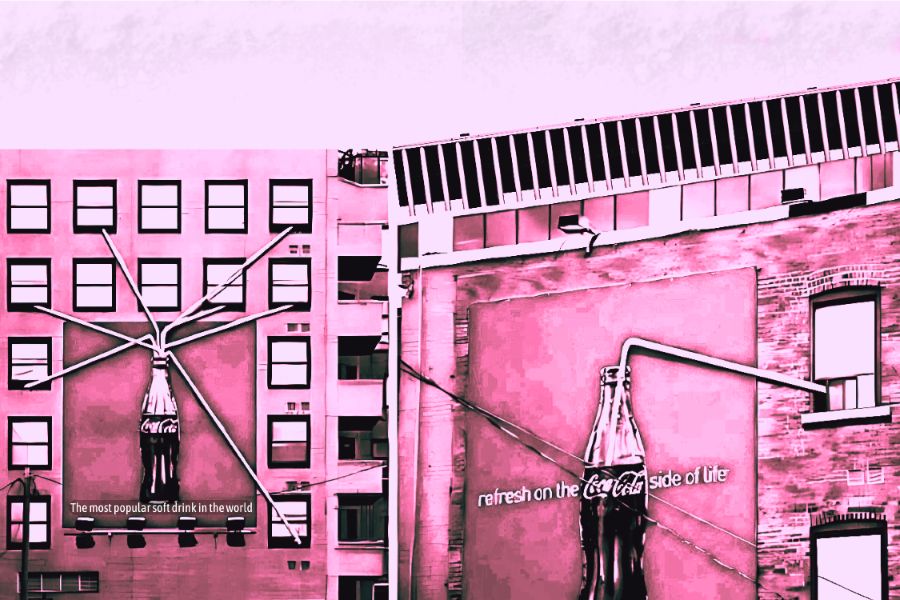
In which window is Asa Candler hiding?
— The Strategic Blind Spot
Candler was no fool. He had turned Coca-Cola from a patent medicine curiosity into a national fountain drink. He understood brand consistency, distribution control, and advertising in an era when most beverage makers barely understood accounting.
But bottling?
Bottling was messy, risky, and capital-intensive. The technology was still unreliable; the Hutchinson stopper could leak or contaminate the drink. Worse, once syrup left Atlanta, Candler lost control over quality. If bottling ruined the beverage, it would ruin the brand.
So when Thomas and Whitehead pitched bottling as Coca-Cola’s next frontier, Candler attempted to discourage them. His warning became legend:
“Coca-Cola is a fountain drink… don’t come crying back if you fail.”
Offloading bottling seemed to him like good risk management. In reality, it was the first domino in a global transformation.
Part II — The Outsiders Who Saw the Future
Thomas and Whitehead were not beverage insiders. They were southern lawyers with a logistical insight far ahead of its time:
If consumers had to travel to the product, scale would always be limited.
If the product traveled to the consumer, scale became infinite.
Bottling wasn’t a novelty—it was mobility.
Mobility meant accessibility.
Accessibility meant ubiquity.
Their idea reframed Coca-Cola not as a drink, but as a portable consumer good—a shift as significant as the move from desktop to mobile computing a century later.
Part III — The Deal That Built a System
Discover How a $1 Deal Built the Coca-Cola Bottling Empire (1899–Today)
Candler eventually agreed to their proposal, granting bottling rights across nearly the entire United States (excluding territories where informal bottling already existed).
The price: $1, which he never even collected.
The duration: Perpetual.
The syrup cost: Fixed, regardless of future inflation.
The contract unintentionally created a two-kingdom system:
- The Coca-Cola Company (Atlanta): Owner of the brand and source of syrup
- The Parent Bottlers (Chattanooga): Owners of the product’s physical form and distribution
This dual structure forced both sides to maximize volume. Because neither controlled the entire system, the system itself became the engine of scale.
Part IV — John T. Lupton and the Funding of a New Industrial Model
Thomas and Whitehead had the rights—but not the capital. A bottling plant cost roughly $7,500 in 1899, and a continental network required hundreds of them.
Enter John T. Lupton, a wealthy Chattanooga capitalist. His investment catalyzed the system, enabling the first official bottling plants to open in Chattanooga and Atlanta.
Realizing they couldn’t build the country themselves, the trio created a new franchising structure:
the Parent Bottler / sub-franchise model.
Local entrepreneurs bought territory rights, built plants with their own capital, and purchased syrup from the Parent Bottlers at a markup.
This model delivered:
- National coverage within years
- Local owners deeply invested in brand success
- Rapid infrastructure development without corporate spending
It was franchising before franchising had a name.
Part V — The Contour Bottle: A Design That Enforced the System
As competition grew—Koke, Kola-Kola, Toka-Cola—the bottlers needed a way to protect the brand. Their answer changed design history.
In 1915, they commissioned a bottle recognizable “by feel in the dark.” The Root Glass Company responded with the now-iconic contour bottle, inspired by the cocoa pod.
This distinctive packaging became a physical trademark, protecting the system and reinforcing uniformity nationwide.
Part VI — The Nickel Coke and the Economics of Perpetuity
The fixed syrup price in the 1899 contract produced an unexpected outcome:
Coca-Cola sold for 5 cents for over 70 years.
Why?
- The bottlers needed predictable margins.
- The Company needed high volume to offset low syrup prices.
- Vending machines could only accept a single coin.
The result was price stability unmatched in consumer goods—a legendary psychological anchor that fortified brand loyalty through wars, recessions, and cultural shifts.
Part VII — The Legal Wars That Shaped Modern Coca-Cola
The perpetual clause and fixed syrup price caused severe strain when sugar prices spiked after World War I. Coca-Cola even attempted to terminate the bottling contracts in 1920, triggering litigation.
The 1921 Consent Decrees saved the system. The bottlers relinquished fixed pricing; the Company reaffirmed perpetuity. This created the pricing formula that defined Coca-Cola economics for decades.
A similar storm emerged in the 1980s over high-fructose corn syrup and Diet Coke, producing landmark legal battles that eventually led the Company to renegotiate franchise terms across the system.
Each dispute strengthened the system’s durability.
Part VIII — Consolidation and the Modern Coca-Cola System
By the late 20th century, hundreds of family-owned bottlers consolidated under large “anchor bottlers.” Coca-Cola reacquired the major Parent Bottler lines Thomas in 1974 and Lupton in 1986—ending the original division that began in 1899.
Yet the core logic remains unchanged:
- Coca-Cola owns the brand.
- Bottlers own the distribution.
- The system thrives through shared incentives.
What began as an offloaded risk is now a globally replicated blueprint.
Part IX — The Strategic Lesson
The 1899 Coca-Cola bottling agreement is perhaps the greatest example of unintended strategic brilliance in American business.
Candler avoided risk and catalyzed a self-financing distribution network unmatched in scale.
Thomas, Whitehead, and Lupton saw opportunity and built a system decades ahead of its time.
The brand and the bottlers needed each other.
Their tension created resilience.
Their partnership created an icon.
Conclusion: The One-Dollar Deal That Changed the World
From one uncollected dollar, Coca-Cola built:
- The largest beverage distribution system in history
- One of the world’s most recognizable packages
- The longest-standing price anchor in consumer goods
- A franchise model emulated worldwide
- A brand present in 200+ countries
The Coca-Cola System endures because it was built on a profound truth:
A great brand can be invented by one company—
but it takes thousands of entrepreneurs to conquer the world.
historyatlanta.com
The Whitehead Memorial Room – History Atlanta
history.com
Coca-Cola sold in glass bottles for the first time | March 12, 1894 – History.com
wikipedia.org
Asa Griggs Candler – Wikipedia
toastykettle.com
History of Coca Cola: Myths, Legend
cocacolaunited.com
In 1866, the recipe for Coca-Cola was created by Atlanta pharmacist Dr. John Stith Pemberton. In 1891, Asa Candler acquired own
coca-colacompany.com
coca-cola-a-short-history-125-years-booklet.pdf
brandingforum.org
The Evolution of the Coca-Cola Glass Bottle: From 1899 to 2023 – World Branding Forum
cocacolaunited.com
History – Coca-Cola UNITED
historyoasis.com
Asa Candler the Coca-Cola King – History Oasis
cocacolaunited.com
In the beginning . . . – Coca-Cola UNITED
atlantaga.gov
Dixie Coca-Cola Bottling Company Plant | Atlanta, GA
law.justia.com
Coca-Cola Bottling Co. v. Coca-Cola Co., 769 F. Supp. 671 (D. Del. 1991) – Justia Law
tennesseeencyclopedia.net
Coca-Cola Bottling Company – Tennessee Encyclopedia
worldradiohistory.com
Billboard 1979-10-27.pdf – World Radio History
archive.org
Full text of “The Atlanta Constitution 1933-08-13: Vol 66 Iss 61” – Internet Archive
zycus.com
Coca-Cola Contract Story: A Lesson in Price Control | Zycus
law.justia.com
Coca-Cola Bottling Co. of Shreveport v. COCA-COLA COMPANY, 563 F. Supp. 1122 (D. Del. 1983) – Justia Law
dc.law.mc.edu
The Legally Savvy Entrepreneur – MC Law Digital Commons – Mississippi College
tshaonline.org
Soft-Drink Industry – Texas State Historical Association
grokipedia.com
Fixed price of Coca-Cola from 1886 to 1959 – Grokipedia
americanbusinesshistory.org
How Chattanooga Brought Coca-Cola to the World – The American Business History Center
moas.org
The Root Family and Coca-Cola – Museum of Arts & Science
ato.org
Chapter Eternal: John T. Lupton, North Carolina ’47 – Alpha Tau Omega
investopedia.com
The Evolution of the Coca-Cola Brand – Investopedia
virginiahistory.org
Central Coca-Cola Bottling Company, Inc. | Virginia Museum of History & Culture
Gemini, Dall E, Leo, Claude